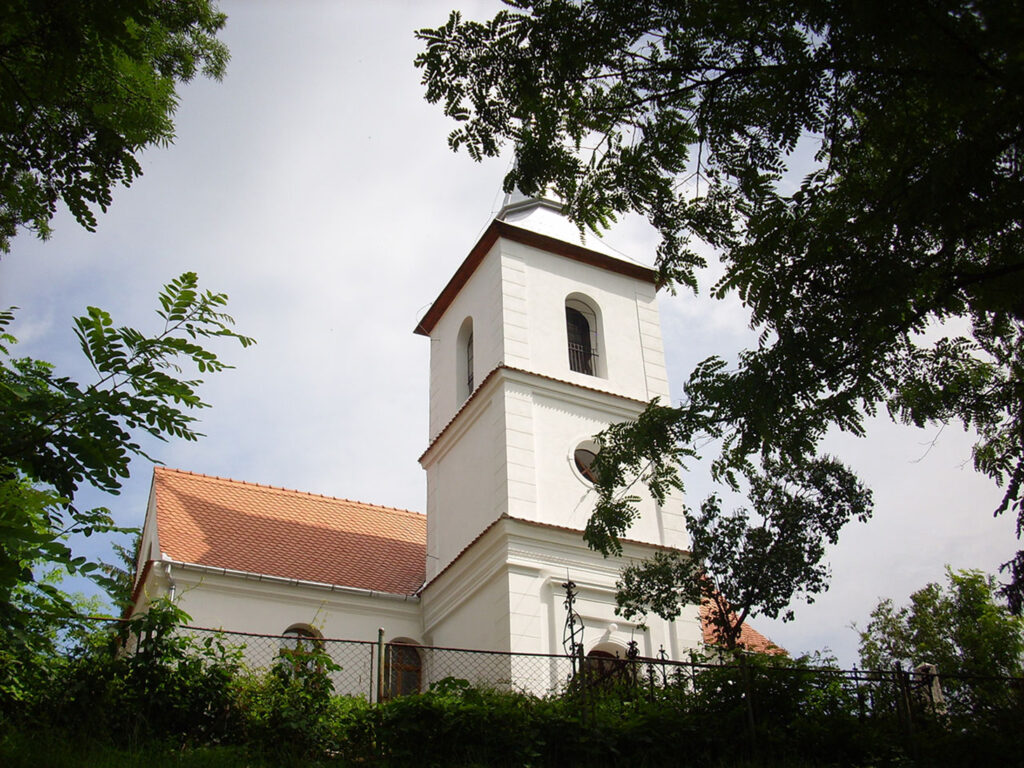
In Belin, a commune situated on the border between the Szekler and Romanian areas in the northern part of Covasna County, economic activity remains low, with only 8 employees per thousand inhabitants, compared to a county average exceeding 120. Although Brașov and Sfântu Gheorghe, two cities with active labor markets, are located just a few kilometers away, Belin has remained outside this economic dynamic until now.
The explanation is closely tied to the educational path of the locals, especially the Roma community, where many children stop learning as soon as they finish the compulsory grades provided by law. Without continuity in education and subsequent vocational training, young people are left with few employment options.
How can such a reality be changed? Through partnership and constant presence in the field. The Amfiteatru Foundation has been working in Belin since 2018, and in 2021, through the project “Avdives, khetanes,” it offered remedial education for 110 children. This ongoing collaboration has laid the groundwork for extended support that covers the entire journey today: from the early school years to securing a job.
The first stage of this intervention addresses the problem at its root. Through the new project “School Makes Us Better!”, 204 Roma students, 131 from the primary cycle and 73 from the lower secondary cycle, receive homework help and assistance in catching up on school subjects every day. They participate in financial education and communication workshops, take part in cultural and sports activities, and receive school supplies, clothing, and hygiene kits. In addition, over 7,000 warm meals are offered to them at school, an essential support to keep the risk of school dropout generated by financial shortages at bay. Furthermore, the intervention goes beyond the sphere of students: teachers receive specialized guidance, and 50 parents participate in counseling sessions. Thus, when children, teachers, and parents work together, the support network takes root in the community and continues to function from within.
For those who have already passed school age, support continues through professional training. The current strategy targets a broad target group in the region, 224 young people from the NEETs category and 90 participants of Roma ethnicity. The programs prepare trainees for occupations sought after on the local market, such as housekeepers, security guards, cleaning staff, or green space caretakers. The approach goes beyond the classic format of theoretical training: the courses combine digital literacy with the development of practical skills and counseling sessions meant to increase their self-confidence. Moreover, the endeavor includes direct connection with local employers and concrete support for obtaining a contract, so that the motivation to learn is supported by the immediate prospect of a stable income. Results are already visible in the village: on April 7, 2026, 28 people started the qualification course as a housekeeper, successfully completed on May 27, being quickly followed by the graduation of another 26 participants trained as security guards, while field mobilization continued with new practical sessions for cleaning staff and green space caretakers.
Built on a constant presence since 2018 onwards, the long-term partnership offers a direct response to the main local challenges: it supports young people from the Roma community to continue their studies, ensures the workforce necessary for local economic development, reduces social inequalities and combats depopulation, thereby restoring Belin’s chance at sustainable development from within.
Source: **, Integrated Development Strategy of Belin Commune, 2021-2027, Develo Group Consulting, pp. 39-77.