Education offers children not just knowledge, but above all the self-confidence needed to build their future. However, while students in large cities benefit from modern resources, those in rural areas face major shortages, turning access to quality education into a privilege influenced by one’s background.
In this context marked by regional disparities, the projects of the Amfiteatru Foundation dedicated to supporting students aim to bridge systemic gaps where socio-economic vulnerability influences the future of young people. In Olt County, initiatives such as “Together for a better future in Olt,” implemented in Fălcoiu and Drăgănești-Olt, and the new project “Education for the future” in Slatina, demonstrate that real change is produced through interventions adapted to the level of each community.
Community X-ray and directions for action
To find out what the reality on the ground is like, we spoke with Anca Bălcescu, a specialist in cultural education programs and the identification of vulnerable students, and Andrei Constantin, a parental information expert. They explained to us that the barriers to education are complex, with a major challenge being precisely the adaptation of interventions to the specific profile of each target group.
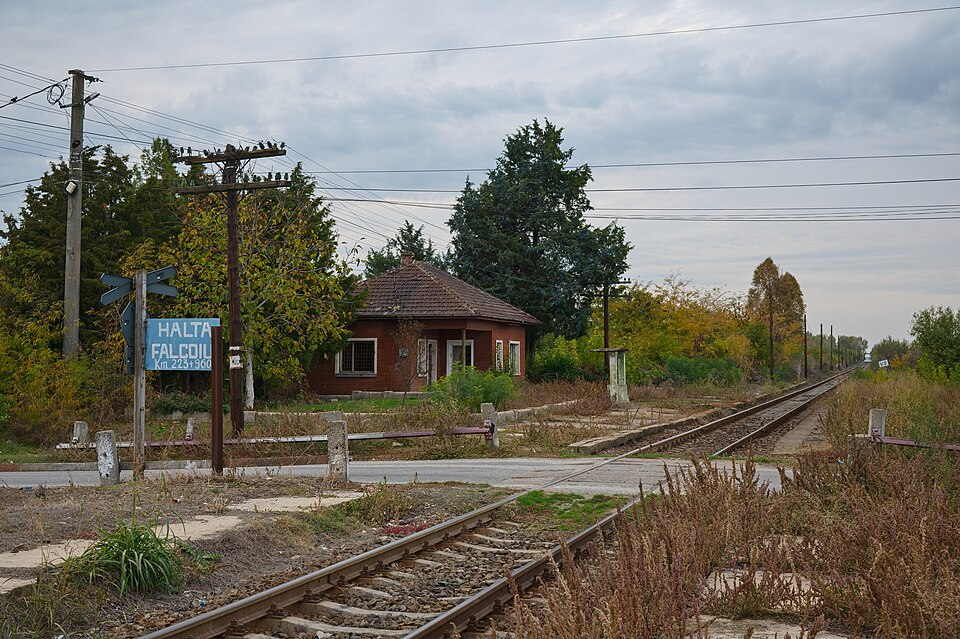
Thus, in Drăgănești-Olt, where a traditional Romani community exists, it is essential to maintain a balance between preserving the Romani language, traditional dress, and customs, and guaranteeing equal access to educational opportunities. In contrast, in Fălcoiu, within the Rudari community where the Romani language is not spoken, the intervention requires a different approach based on building trust, learning about local history, and specific origins.
Besides preventing school dropout, the educational intervention also aims to recover gaps accumulated in primary and lower secondary cycles, relying mainly on remedial classes organized after school hours. According to Anca Bălcescu, these extra sessions help students deepen the material taught in class, make up for training gaps, and gain confidence in their own abilities, turning school into an environment conducive to learning.
At the same time, the daily commute of vocational school students and the financial pressures families face remain ongoing challenges. Andrei Constantin emphasizes that simply encouraging children to go to classes is not enough; we need to understand the obstacles they face, the family’s financial situation, the distance to school, and the type of support needed. In his view, an efficient project must adapt to the community’s realities and involve the student, the family, and the educational institution alike.
The community’s reaction
At the beginning of any project, community reticence is a natural reaction in the face of initiatives often perceived as temporary. A deep understanding of the family environment plays a decisive role in reducing absenteeism. Parents, although often overwhelmed by modest incomes and material shortages, want a better future for their children. Through direct meetings, information activities, and counseling, families have begun to see school as a real path to social mobility. “At first, we encountered quite a bit of resistance from some parents regarding enrolling the children. It took numerous meetings in the community, direct discussions, and explanations to convince them that education is very important. Gradually, they began to understand the benefits of remedial, personal development, and cultural-artistic activities. Today there is a much greater openness and a better relationship of trust between the project team, the school, students, and families,” said Anca Bălcescu.
This gradual transformation of relationships is also confirmed by Andrei Constantin: “I would say the most important difference is not just at the level of activities or specific school results, but at the level of relationships. Today we have a better bond between students, parents, teachers, and the project team. And this trust built over time is one of the most important changes.”
Cultural workshops and future perspectives
Complementing the educational process with cultural, sports, and personal development workshops organized during school breaks has proven to be a strong anchor in keeping children connected to the school environment. For two months of vacation, students participated in activities tailored to their communities, ranging from traditional Romani dances in Drăgănești-Olt to workshops on the history and traditions of the Rudari in Fălcoiu.
Anca Bălcescu talked to us about how these workshops resonated with the children: “The children welcomed these activities very well. In Drăgănești-Olt, special emphasis was placed on traditional dance and the valorization of specific cultural elements, while in Fălcoiu on learning the history and origins of the community. These activities gave them the opportunity to discover and value their cultural identity in a positive and attractive way.“
This non-formal support creates the framework through which students can build confidence in their own abilities, beyond their usual living environment: “Education doesn’t just mean textbooks and school results. Children also need experiences through which to discover their identity, develop their self-confidence, and learn how to relate to others. Unfortunately, the environment they live in does not always offer them the possibility to participate in such activities,” Andrei Constantin told us.
Positive changes are already visible on the ground: classroom attendance has increased, students come better prepared for remedial classes, and communication between school and family has become more fluid. However, the project “Together for a better future in Olt” continues until 2027, and the main stake remains consolidating these results.
Both Anca Bălcescu and Andrei Constantin express their hope that the benefits achieved so far will be sustained, and the assistance provided will materialize in a decrease in school absenteeism, a heightened student interest in courses, and, most importantly, in boosting their self-confidence. At the same time, they want students to understand that education can positively influence their future and to realize that they have people and institutions ready to support them by their side.
“We cannot change the conditions in a community overnight, but we can help children have more confidence, continue their studies, and imagine a future different from the one they see around them today. And for me, this would be one of the most important results of these projects.“